Search your choice

Custom Search

Your search results here

Showing posts with label BMW Auctions. Show all posts

Wednesday, 1 June 2011

BMW BLOG Visits BMW Classic 2

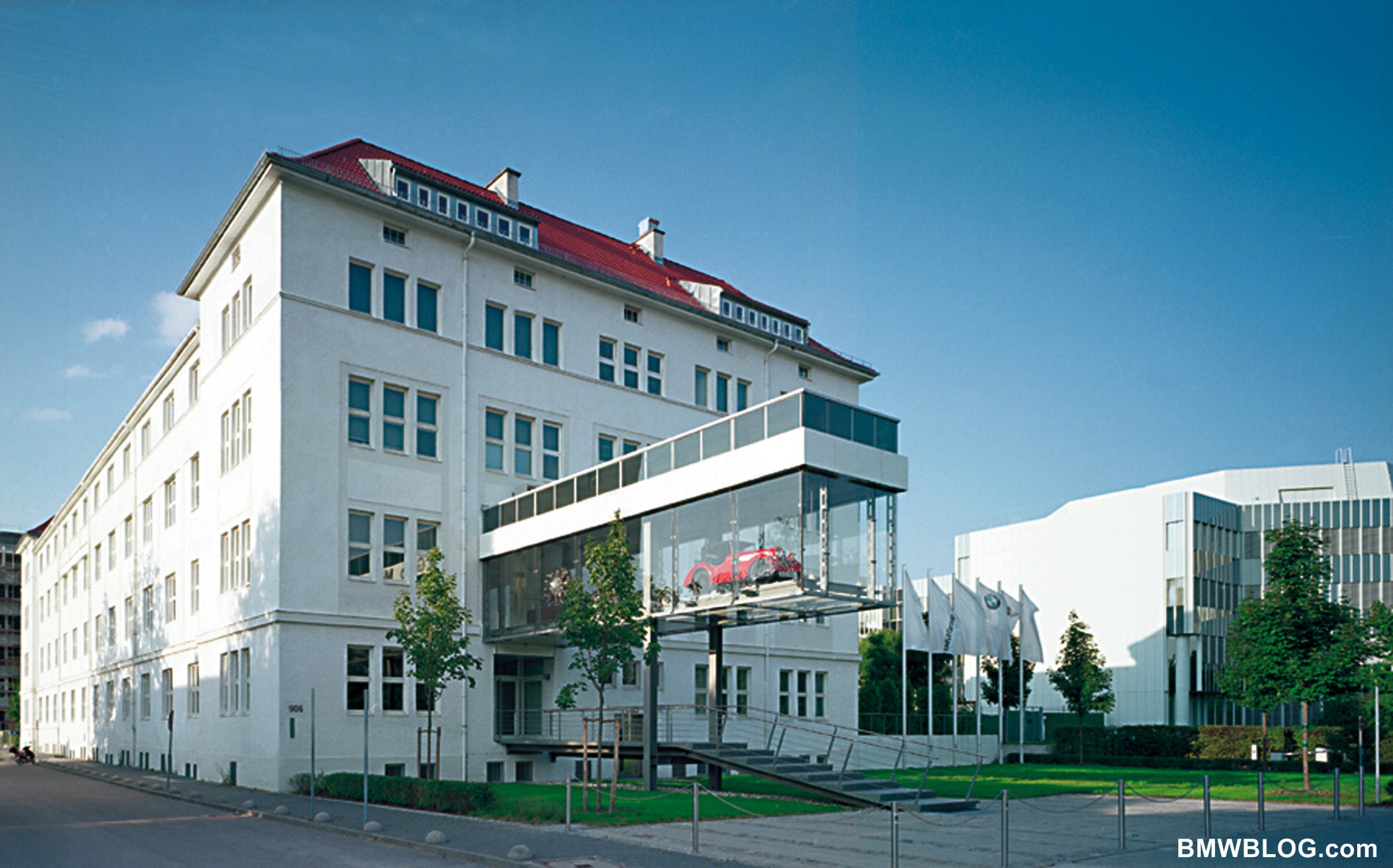
Munich, Germany – The last stop for me on Innovation Day was a walk from the FIZ on BMW-Allee to the BMW Classic facility. Located on Schleissheimerstrasse, the multi-story building houses pieces of the BMW collection that are not on display in the museum, corporate archives, and vehicle workshops. BMW Classic used to be called BMW Mobile Tradition and it was primarily an in-house restorer and maintainer of BMWs owned by the corporation.
That role has changed however. As appears in the BMW Classic press release, “BMW Group Classic coordinates all the activities of the BMW Group which are associated with the history of the company, its products and three brands. The relevant classic activities of BMW, MINI and Rolls-Royce are unified under the auspices of BMW Group Classic. The platform is formed by the classic mainstays of museum, archives, club support and the BMW Centre, as well as event organisation and specific classic communication. Classics from the BMW Group’s own collection are not simply housed in the museum, they are on the road at events throughout the world.

 “The BMW Classic Centre has been available for friends of the BMW brand since autumn 2008. The big advantage for customers who take their vehicle to the original manufacturer is complete service from a single source. The Classic Centre possesses the theoretical knowledge of the vehicles, the technical know-how, the original BMW parts and the infrastructure necessary to integrate all these aspects systematically. Classics in immaculate condition have been sold since autumn 2010 alongside the service and restoration activities. ”
So they now work on customer vehicles. And they have the resources to do that are better than any independent shop. They have the technicians, the parts, and the know-how (including their extensive archives) to restore pre-war, and more frequently, post-war BMWs. While the facility in Munich is limited in total space, they are rolling out the notion of a project “Customer Workshop” in other locations around the world in conjunction with top flight local facilities. And they not only work on classic road going cars and motorcycles, but racing vehicles also.
But that building on Schleissheimer Strasse is still the heart of the enterprise. Herr Florian Moser was my host for the visit and he met me in the lobby, fresh from my day at the FIZ, and gave me a rundown of the BMW Classic’s activities. We did not have an opportunity to view the meeting space and vehicles on the ground floor (one of which was a BMW 303 – the first BMW with the kidney grilles) due to a tour arranged for a club using the meeting facility. Nor did we stop at the archives located on the first floor (second floor to us ‘mercuns). But we did ascend further up the staircase to the workshops and vehicle holding areas.
The stairwell is at the front of the building and is fairly well isolated from the environment of the individual floors. I noticed no old paper smell (a smell that book lovers recognize in the faintest
concentration) as we hit the first floor landing. And then we moved up to the story that housed the road-going cars, and Herr Moser opened the door. And it hits you. The perfume that petrol heads the world over embrace, gasoline and lubricants. I stood there and breathed deeply, carcinogens be damned, I was going to indulge my nostrils in that delightful odor. And with a smile and a sigh, I looked back at Herr Moser, who smilingly said, “We know who the gear-heads are when we open the door.”
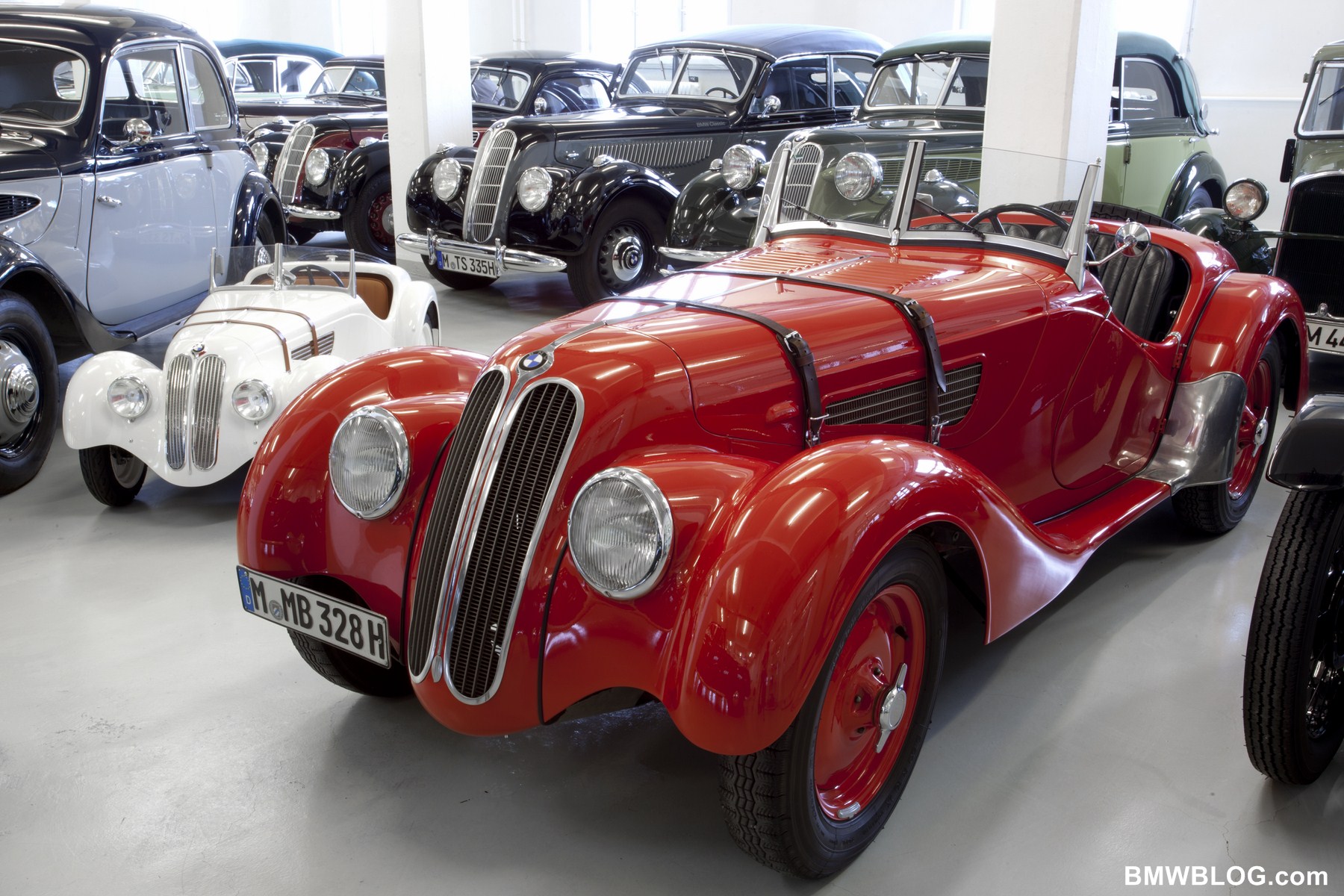
And as good as the olfactory welcome is, the visual treat is beyond belief. Arrayed throughout the room are cars and motorcycles that speak directly to the evolution of BMW. Pre-war cars, a handful of immediate post-war cars (including a 700) and then the Neue Klasse cars, 2002s, legions of 3ers, 5ers, and 7ers. An odd duck or two thrown in for good measure. And then there’s the true odd duck, the 16 cylinder 7er, the motor of which is known as ‘Goldfish’. How difficult is it to cram 16 cylinders in a 7er,? Well, they had to put the radiator in the rear and there is a cyst like bulge on each rear fender to scoop air into the car.
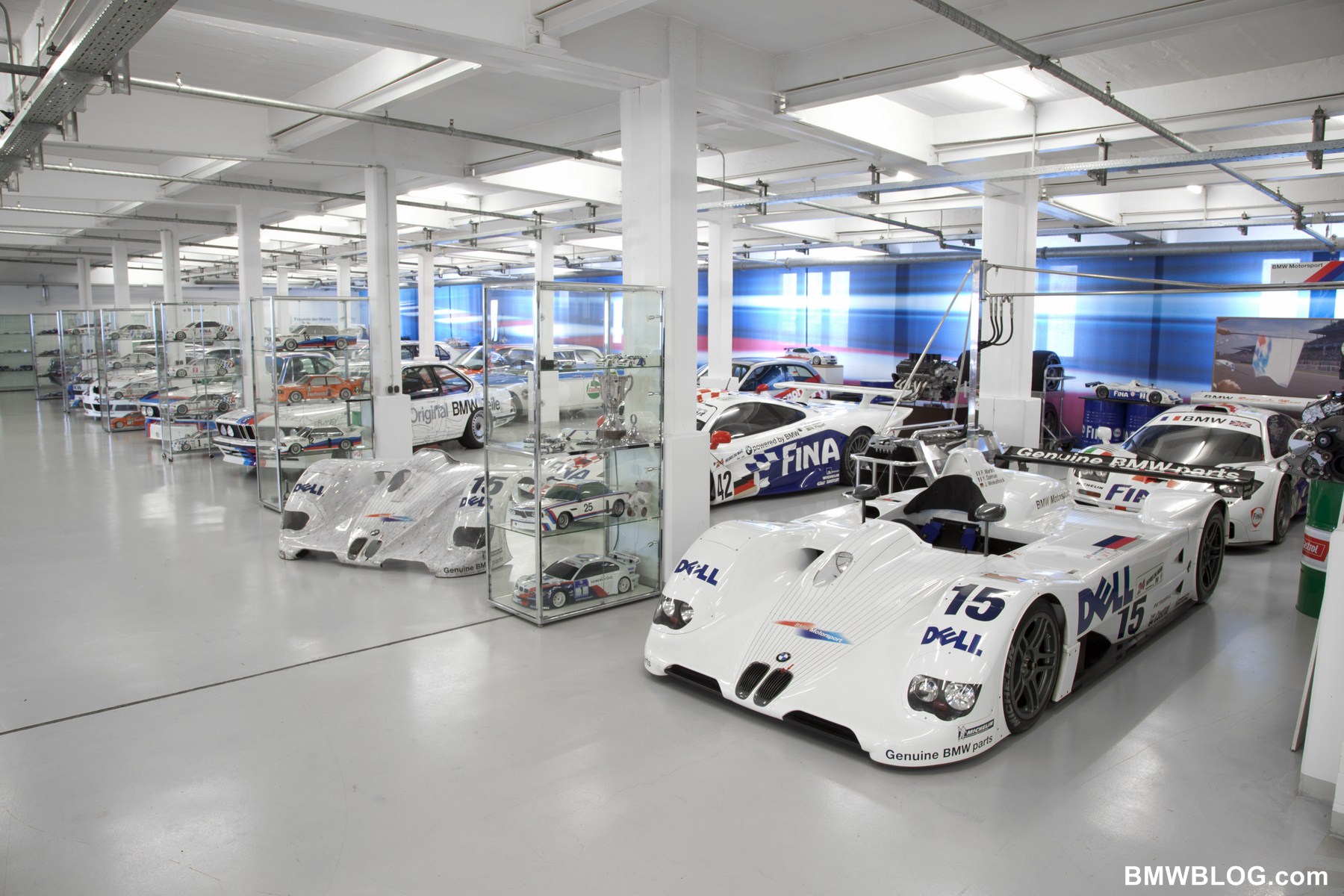
As great as that floor is, moving to the third floor, opened up the M, for motorsports, collection. Here, in one room are as many McLaren F1 cars as you’ll see gathered in one place outside of a Concours d’Elegance. And there’s an N12/13 engine for a Brabham F1 car, presumably a BT-52 (the B in the car designation stand for Brabham and the T stands for Sir Jack’s designer, Ron Tauranac). GT cars, racing M3s, DTM machines and record run motorcycles are everywhere you look. The on-track history this place holds is extra special to bimmerphiles.
In addition to the cars housed on the 2nd and 3rd stories, each story also has dedicated work spaces that are used to maintain and rebuild cars. And now, with its expanded mission, BMW Classic can resurrect your dream historical BMW, whether it’s a pre-war 328 or a 3.0 CSL Batmobile. Truly a special place and mission.

Exclusive: BMW 6 Series M Sport Package in Imola Red color

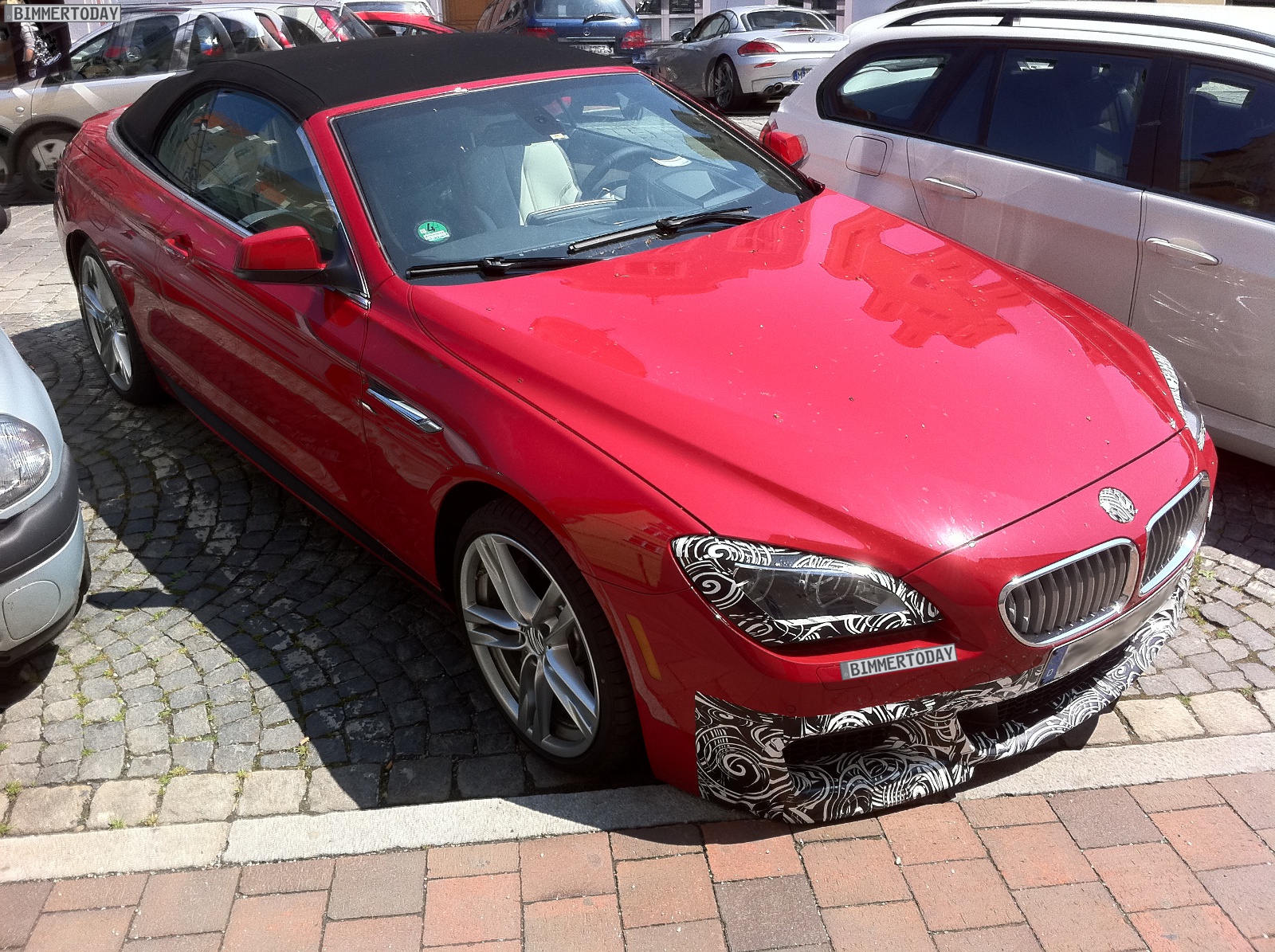
New spy photos from Landshut reveal to us the yet-to-be introduced BMW 6 Series Convertible with M Sport Package. The high-end cabriolet made its official debut earlier this year, with US press test drives taking place in Cabo, Mexico back in April. The car spied also features the Imola Red Metallic color, paint not available to order at the moment.
In addition, the test mule sports the new LED-lightning units and a new set of alloy wheels. The 20-inch double-spoke 373 M are offered as an alternative to the 19-inch 351 M. At the front-end, the 6 Series Convertible gets the usual M-Sport Pack treatment with an aggressive bumper that incorporates larger air inlets. In the back, a set of dark chrome exhaust pipes reflect the sportier package available on the car.
As usual, the M Sport Package also include various components for the interior cabin, including the M Sport steering wheel with shift paddles.
Full details and photos will be revealed in a few weeks.

2012 BMW M5 – New Teaser

Ahead of its M Festival debut, the new 2012 BMW M5 is teasing us once again. An M5 test mule was filmed during high-speed testing at the Nardò Ring in the south of Italy, an important part of the new BMW M5′s development program.
Between June 23 and 26th, 2011, BMW will host an M Festival to celebrate the 24hr race at the Nurburgring race track.
On this occasion, BMW invites fans around the world to have a look behind the scenes at the famous race and also visit the playground where every M car is developed and tested. Also, the new M5 and M3 EVO will be officially introduced.

Full details around the powerplant remain unknown, but we learned in the past that the 2012 BMW M5 is powered by an updated version of the S63 engine found in the BMW X5 M and X6 M. The 4.4-liter V8 twin-scroll powerplant will peak at somewhere in the 570-horsepower range and 530 lb-ft of torque. The 0-62 mph dash should take about 4.4 seconds,
The updated unit delivers both performance and efficiency significantly increased in comparison to the previous engine. Numerous drivetrain innovations and other enhancements have lead to a reduction in fuel consumption and emission levels by more than 25 percent.
The new engine is mated mated to a 7-speed M double-clutch transmission with Drivelogic. The combination of the new engine with M Drivelogic is supplemented by an Auto Start Stop function. A manual option will be offered for US customers.
The super sporty sedan goes on sale in early 2012 and it is rumored to have a base price around $100,000 mark.

Rumor: New BMW Z3 to be launched?

Ready for another rumor? According to BMW insider Scott27, the Munich-based automaker is looking to revive the BMW Z3, the popular roadster that proved to be very successful among BMW fans.
As always, take these rumors with a grain of salt while we’re digging around for confirmation from other sources. Here is what the BMW insider has to say:
The new roadster strategy included a Z2, but while the Z2 was originally part of the F20 modular matrix expansion, BMW has now downsized the car onto another cost-effective platform – the UKL matrix, the modular structure that will accommodate the next MINI and the BMW FWD family. The decision was made to allow BMW to have an entry level roadster as part of its new FWD family which will be under the designation of the BMW 1er. The BMW 1er Sporthatch which will be seen this week will accommodate sDrive badges to distinguish the RWD from the FWD 1er models.
Now the proposal is seen as a BMW Z1 which will allow BMW to share the Z1 Roadster with the next generation MINI Coupe/Roadster/Spyder. The new MINI Coupe and Roadster are very short lifecycle cars. The idea is for the Z1 Roadster to sustain the small Roadster segment whilst a new MINI Coupe and Roadster will arrive in the second half of the decade. The direction the next MINI Coupe and Roadster take will depend on the reaction to the new car which will break cover in a few weeks time. The car could take on a more individual appearance from the next MINI.
Z1 will allow the BMW 1er FWD family to offer a variety of cars to customers who are expected to migrate from other brands to BMW. The company recently held workshops in cities in Germany where they did a survey on the FWD City Compact and the FWD GT. Subjects chosen were not BMW customers but from other brands, and found the two cars different and very appealing. The Compact was very well received as was the GT which was tested amongst current owners of euro- mini MPV’s.
With the movement of the Z2 to the UKL matrix, but under a newer design guise to bring it into contention with the other UKL cars, the original Z2 proposal will now move upwards to effectively replace the Z4 as the premium entry roadster market which is proposed as a BMW Z3, the resurrection of the 1995-2002 first modern BMW Roadster. Given that the segment grows not only in markets but also in dimensions, the Z3 allows for the Z4 to take another surge upmarket and retain its current appearance with a folding hard-top as the Z5. Effectively in what the Z2 was – RWD , soft-top , compact and additional Coupe ,will now be the Z3 if BMW’s executives get their way.
The return of the name is something that could bring the nostalgic owners back and another choice for the “Homecoming” visitors who take their annual pilgrimage to Spartanburg each year to it’s home. Z3 could even return to Spartanburg for production if it proved cost effective for BMW?”
There you have it, more rumors on top of the already long-time speculated BMW Z2.

BMW 328 Hommage – The Official Making-Of Video

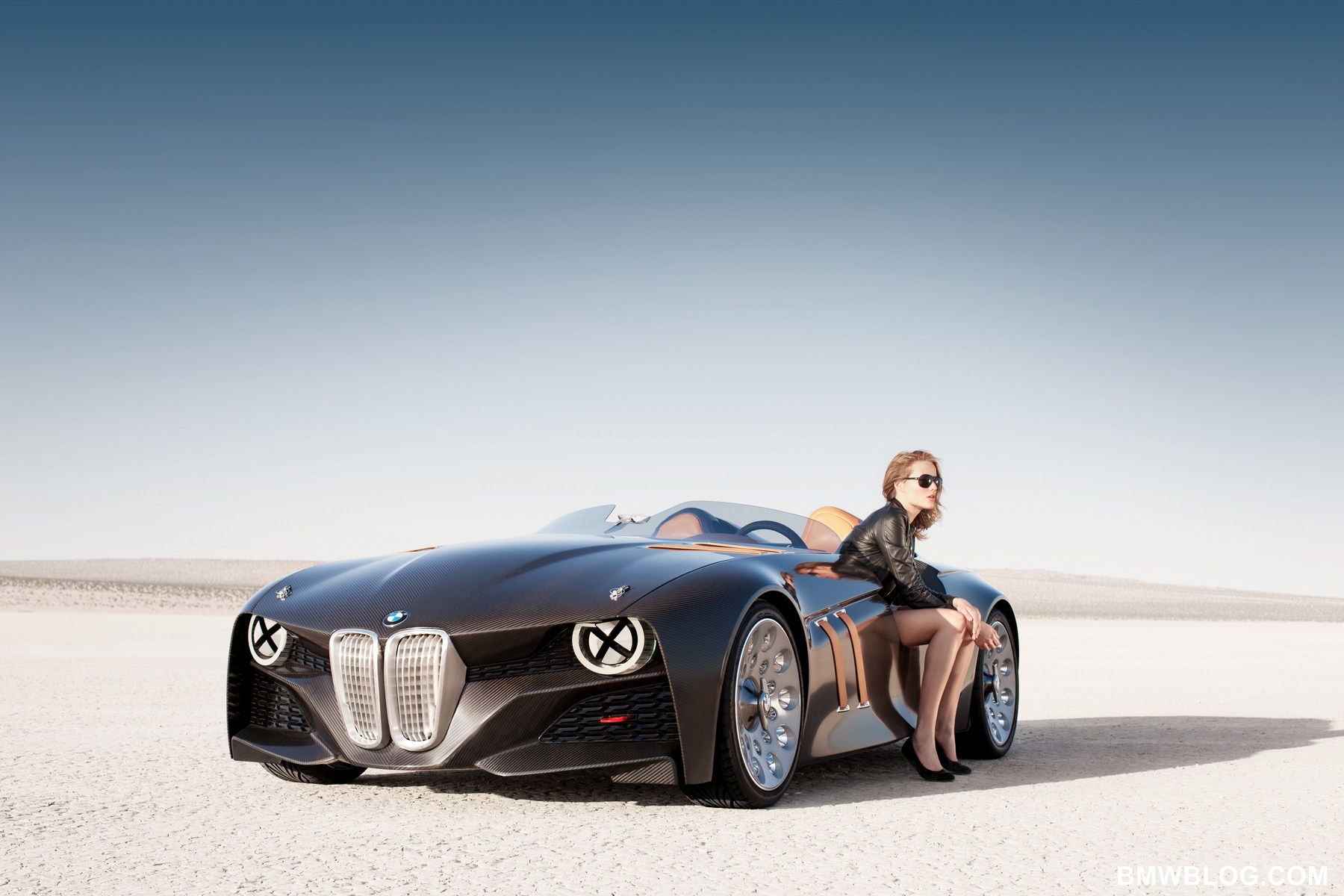
BMW and director Philip Hodges take us behind the scene of the new BMW 328 Hommage. Centered around BMW Design and Christopher Wilson’s photoshoot, this glimpse into the makings of a great photo is not to be missed.
This year, the original BMW 328 celebrates its 75th birthday and at the Concorso d’Eleganza Villa d’Este, BMW showcased this new two-seater anniversary model. The 328 Hoomage pays tribute to one of the most successful and best-looking car of the 1930s, the original 328.
With the new 328 Hommage, BMW also showcases some of the technology and materials that we will see in future production vehicles. The major parts of the exterior and interior of the BMW 328 Hommage are made of carbon fibre reinforced plastic (CFRP), a lightweight material that was used in the series production of CFRP roofs and structural components for the BMW M6 as well as CFRP roofs for the BMW M3.

Column: Braking Systems And You


A brief introduction to brakes and the reasons for their evolution with some advice thrown in for good measure.
Ever stop to think about your brakes? Most people don’t think too much of them until they start squeaking, shaking or worse, give out all-together. I don’t have to be a mechanical engineer in order to appreciate a piece of tech that in many instances has saved my life.
There is something quite special about braking systems that intrigues me and even more so in today’s ever heavier, ever more powerful cars. The story behind the need for more high performing brakes is a rather romantic one in my opinion and follows a “cause and effect” order.
With our never-ending desire for more power, automobile manufacturers were forced to increase their engine size. This meant a larger displacement, more cylinders which bring with them extra intake and exhaust valves, larger camshafts, bigger radiators, larger intercoolers…the list goes on. All that power required a stronger, sturdier clutch and linkage. Additionally, now that the vehicle is capable of higher speeds, it now requires stronger suspension parts to cope with the cornering abilities of the car.
Now on to the interior. On top of the power demands we make, we also like a bit of luxury. Nothing makes us feel more in command than a really comfortable, leather clad, lumbar supportive, side adjustable, heated and cooled, massage capable electric seat. Next up is safety and airbags. Don’t get me wrong, I’m not condemning these things, I’m just trying to make a point.

Where are you going with this you may ask? If you haven’t picked up on the theme just yet, it’s weight. All of the above listed are bigger, heavier and carry more mass than their predecessor. Now for a bit of physics:
An object with a large mass, in motion (say 62 mph) takes longer to come to a full stop than an object with a smaller mass. Or, in basic car talk, a heavier car takes longer to stop than a lighter car does.
Everything adds weight, and weight is the enemy.
BMWis investing more and more time and effort with their on-track presence at the Nurburgring, but also with their simulation test rigs to ensure that the braking systems going on their cars, and subsequently your car are the best that they can be.
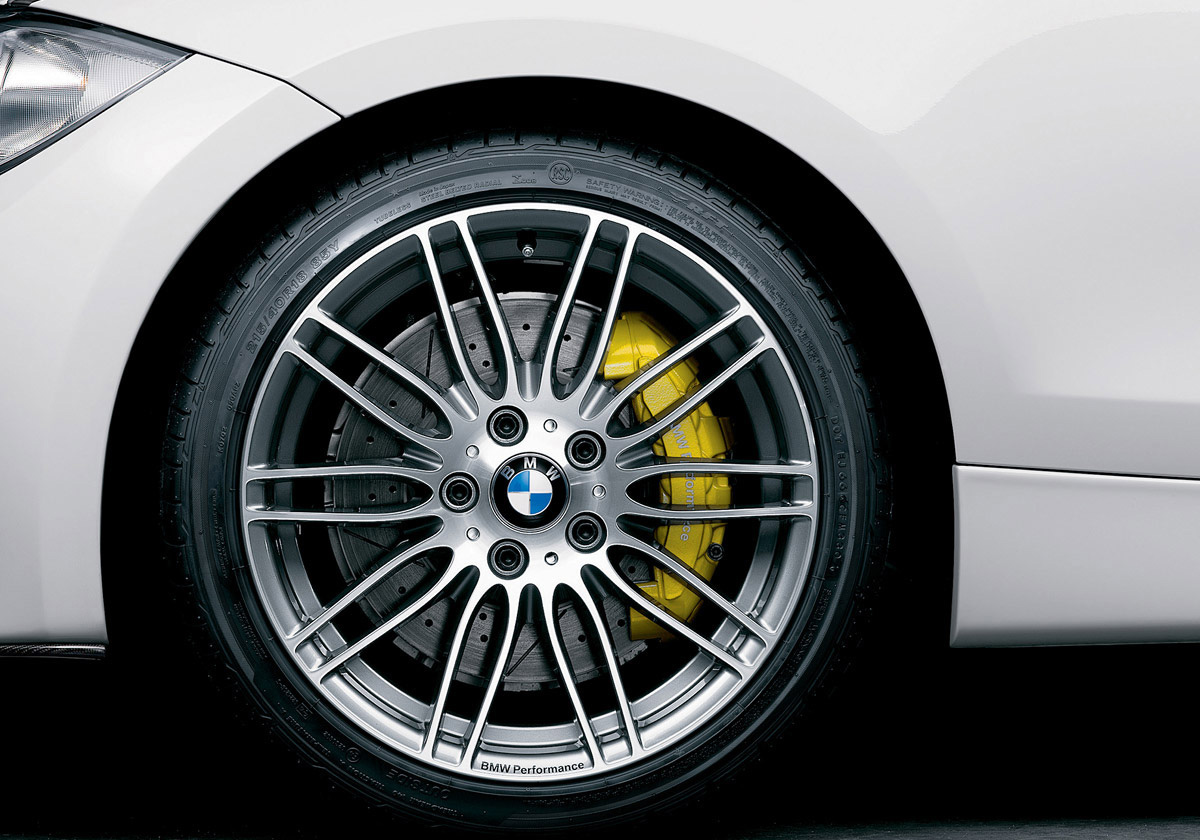
If however you are seeking something a bit more track oriented while at the same time keeping things civilized for everyday driving, then one quick look at the BMW Performance Brake Kit will be your answer. These brakes are tested even more stringently and provide performance gains that normal driving wouldn’t otherwise necessitate.

Additionally, regular brake fluid maintenance as well as periodic brake line inspections are encouraged if you fall within the “spirited driving” category.
Here are some more tips that might come in handy as well as extend the life of your brakes:
  • When constant braking is required, such as downhill driving, try to be in a lower gear in order to provide some engine braking and help the breaks breathe out a bit. Additionally, try not to stand on your brakes for too long of a period. The friction material that your brake pads are made out of will begin to breakdown and produce gases as well as heat that generate a space between the pads and the rotor surface. To allow these gases and particles to escape as well as to cool your brakes, lift off from your brake pedal every so often. Not too often though as you may start to annoy the car behind you!
  • After excessive braking, try not to drive through large puddles of water or wash your car immediately. The rotors are hot and the cold water can lead to your rotors warping. This will manifest itself through your steering wheel vibrating or shaking when you apply the brakes.
  • BMW cars are somewhat notorious for the amount of brake dust that they generate. This might be due to the softer compounds that BMW utilize in the construction of the brake pads themselves. However, keeping your wheels clean and brake dust free will ensure that your brakes receive fresh, cool airflow. Too hot is bad and too cold is also not good.
  • Lastly, if your BMW is equipped with brake cooling ducts that bring in fresh air from the front or side air inlets, be sure that no leaves or debris is present that could obstruct the flow of air.
And now you know a little bit more about your brakes, their evolution, the extensive tests that BMW conduct in order to ensure that you are able to reign in your Ultimate Driving Machine as well as some basic tips to ensure that you are doing all that you can to continue enjoying you road trips!

Tuesday, 31 May 2011

“Dynamic Light Spot” – BMW innovations in vehicle lights


Press Release: Outstanding innovations in the area of vehicle and safety engineering have always characterized cars from the BMW Group. With many technological leaps forward, BMW has often been the pacesetter for the entire automobile industry. The sensor system-based, environment-networked driver assistance systems from BMW ConnectedDrive such as the camera-based Speed Limit Info launched in 2008 have been the innovation drivers. Now, BMW has taken the lead once again with the vehicle’s external lighting, the “Dynamic Light Spot”. The “Dynamic Light Spot” is a spotlighting system that automatically directs a beam of light onto pedestrians at an early stage, thus alerting the driver.
In critical situations, the safety gain for pedestrians and for the passengers in the vehicle is enormous. Another feature that BMW has presented is the “Glare-free high beam assistant”. The system locates vehicles approaching from the opposite direction and vehicles ahead, and prevents glare, despite the high beam being switched on. In this manner, the high beam component is significantly increased, which also brings about a sustained improvement in safety. Another gain in safety, not to be underestimated is the new, optional full-LED headlight, now debuting in the new BMW 6 Series Coupé.

“BMW Dynamic Light Spot”: a targeted beam of light for increased safety .
The risk of a pedestrian dying or getting injured in a traffic accident is four times as high at night or at twilight than in daylight. The same applies to the passengers themselves. Accidents and, in particular, serious accidents at night are very often caused by the late recognition of persons or animals (e.g. deer) on the road. With BMW Night Vision, BMW has deployed a very effective assistance technology for driving in the dark under the umbrella of the technologies of BMW ConnectedDrive. BMW Night Vision helps the driver using a thermal imaging camera for anticipatory and safe driving at night. This support will be expanded by another BMW innovation for increasing the safety of night driving, in the form of the “BMW Dynamic Light Spot”. Through targeted illumination of pedestrians on the road, the system ensures increased safety for all those involved, including the driver of the vehicle. By using “BMW Dynamic Light Spot”, the driver can usually avoid a collision or at least reduce its severity. The “BMW Dynamic Light Spot” is a so-called marking light. This system uses sensors to identify potentially endangered objects in the driver’s surroundings which are then illuminated in a targeted manner with a spot of light. At the same time, a beam of light projected onto the road in front of the vehicle leading to the possible collision object draws the driver’s attention to that object. Thanks to early recognition of the pedestrian, the driver can either brake in time or take suitable evasive action.

All cats are grey at night and visibility is very limited .
Conventional low beam light allows drivers a theoretical range of vision of about 50 to 85 metres at night, which does not, however, mean that objects can be recognised at that distance. In tests, the recognisability of a darkly clad pedestrian at twilight was found to be just 29 metres. This is understandable since at greater distances, only the feet are illuminated. If the rule “drive so that you can stop within your visible range” were followed in the dark, it would not be advisable to drive even at 80 km/h since at this speed the braking distance is as much as 63 metres.
Night vision assistants are good, but in future things will be even better .
Today, night vision assistants like BMW Night Vision are available. They provide the driver with an image of the area in front of the vehicle so that pedestrians and animals can be seen even from distances of several hundred metres away. However, this assumes that the driver uses the Night Vision screen like the rear view mirror and casts a glance at it from time to time. The technology works like this: BMW Night Vision uses an infrared camera with a viewing angle of 24 degrees. It generates a thermal image that shows warm objects – people or animals – as bright shapes.
The marking light – targeted illumination helps to gain time .
Today, it is technically possible to identify the position of pedestrians very accurately. Once this position is known, a headlight can focus on that area and show directly where a pedestrian, who is possibly endangered, is. This system is called the Dynamic Light Spot at BMW. The big difference to other marking light assistants is that the BMW system projects a strip of light on the road to direct the attention of the driver to the hazard. The light automatically draws the attention of the driver to the possible collision and triggers an intuitive and fast reaction from him.
He who sees earlier can react earlier .
In general, it is assumed that a vehicle driver drives in the direction in which he is looking. This has been experienced in vehicle safety training when for example, the driver learns to take evasive action from a tight situation – he usually concentrates on the zone directly in front of the vehicle. So in vehicle safety training, when a collision is imminent, the driver is taught to focus on a free pathway or the “escape route” away from the road so that this particular direction for evasive action is within the line of vision. With Dynamic Light Spot, things are different. When an illuminated object that is beyond the braking distance is made visible to the driver, he has sufficient time to use the brakes to stop before the obstacle is reached. At the same time, Dynamic Light Spot and the beam of light on the road are switched off as soon as the vehicle is close enough for the normal lights to continue to illuminate the object. What Dynamic Light Spot from BMW does is to indicate hazards to the driver from as far away as possible and direct his attention to them. The technical components of this system are essentially highly efficient sensors and headlight systems.
The sensor system recognises living creatures by their heat radiation .
To be able to warn the driver of a hazard in time, a recognition distance from the hazard of about 100 metres must be ensured, regardless of the weather conditions. To achieve this, the light marking system must have a sufficiently perceptive sensor system. All the currently available night vision systems based on near infra-red require an input of 100W for illuminating the surroundings in front of the vehicle. This corresponds to an additional CO2 emission of 3 g/km, which is not acceptable in the present circumstances. The BMW Night Vision Assistant has a far greater recognition range and no additional light source is required. This is because BMW Night Vision is based upon detection of the heat radiated by objects and is additionally less susceptible to the influence of the weather. BMW Night Vision guarantees positive recognition of persons at a distance of 97 metres on average.

Headlight systems: with LED Arrays the obstacle is in direct view.
When, as in the case of BMW Night Vision, the vehicle is fitted with a suitable sensor system to achieve recognition of persons at an adequate distance, it has to be complemented by corresponding headlight technology to realise Dynamic Light Spot. There is a wide range of technical possibilities from pixel light headlights and Xenon and swivelling modules to the so-called LED arrays – all with specific advantages and disadvantages. At present, the light marking is achieved using a swivelling LED spotlight. This ensures that with a low energy requirement, a beam of light that is optimal for the driver is generated in a highly dynamic manner, and a pleasant light image is generated by the swivelling movement. In the case of “BMW Dynamic Light Spot”, these high-power LEDs are integrated into the installation space of the fog lamps so that the remaining vehicle lighting can be conventional technology; full-LED headlights are not a system requirement.
Dynamic Light Spot can significantly reduce accident figures.
BMW is planning to include the Dynamic Light Spot functionality as a part of the special BMW Night Vision system; it is a result of the BMW ConnectedDrive innovation philosophy for its future new models. The gain in safety – for the drivers and passengers and those who could possibly be involved in a collision at night – that BMW is striving for has already been proven within the framework of system development. During BMW test drives in the development phase of Dynamic Light Spot, on average one object was highlighted and illuminated every hour.

Glare-free high beam assistant – less work and more light .
Driving at night or in poor visibility is far more stressful than daylight driving for most drivers. One of the reasons for this is the late and more difficult recognition of the road in dark surroundings – which is also due to the reduction of the colour perception of the eye. In addition, there are the strong bright/dark contrasts, which force the eyes to constantly adapt to brightness or darkness. In addition, especially in the case of the eyes of middle-aged people, this so-called adaptability noticeably falls with increasing age.
Available Now: the high beam assistant relieves the driver .
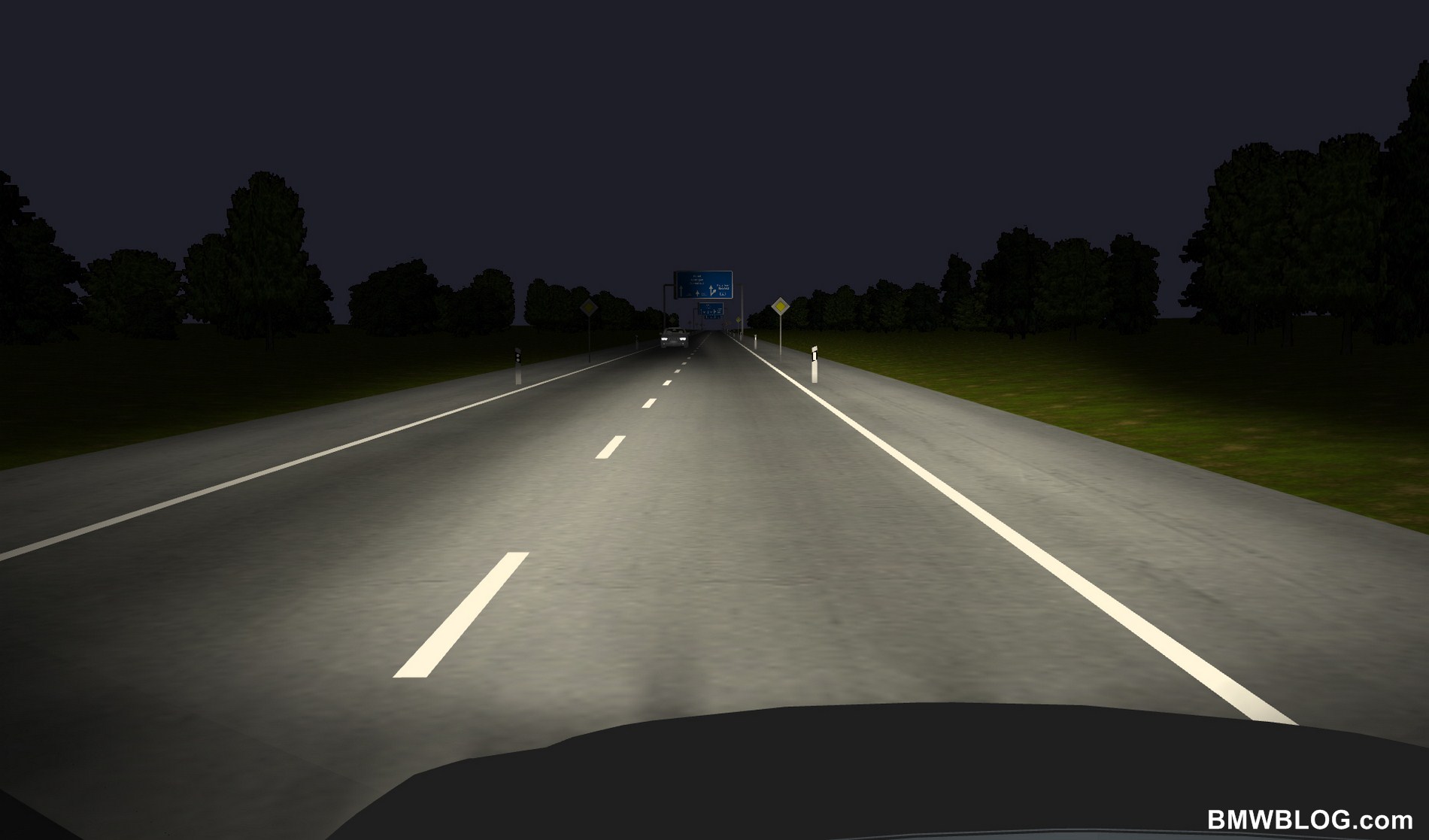
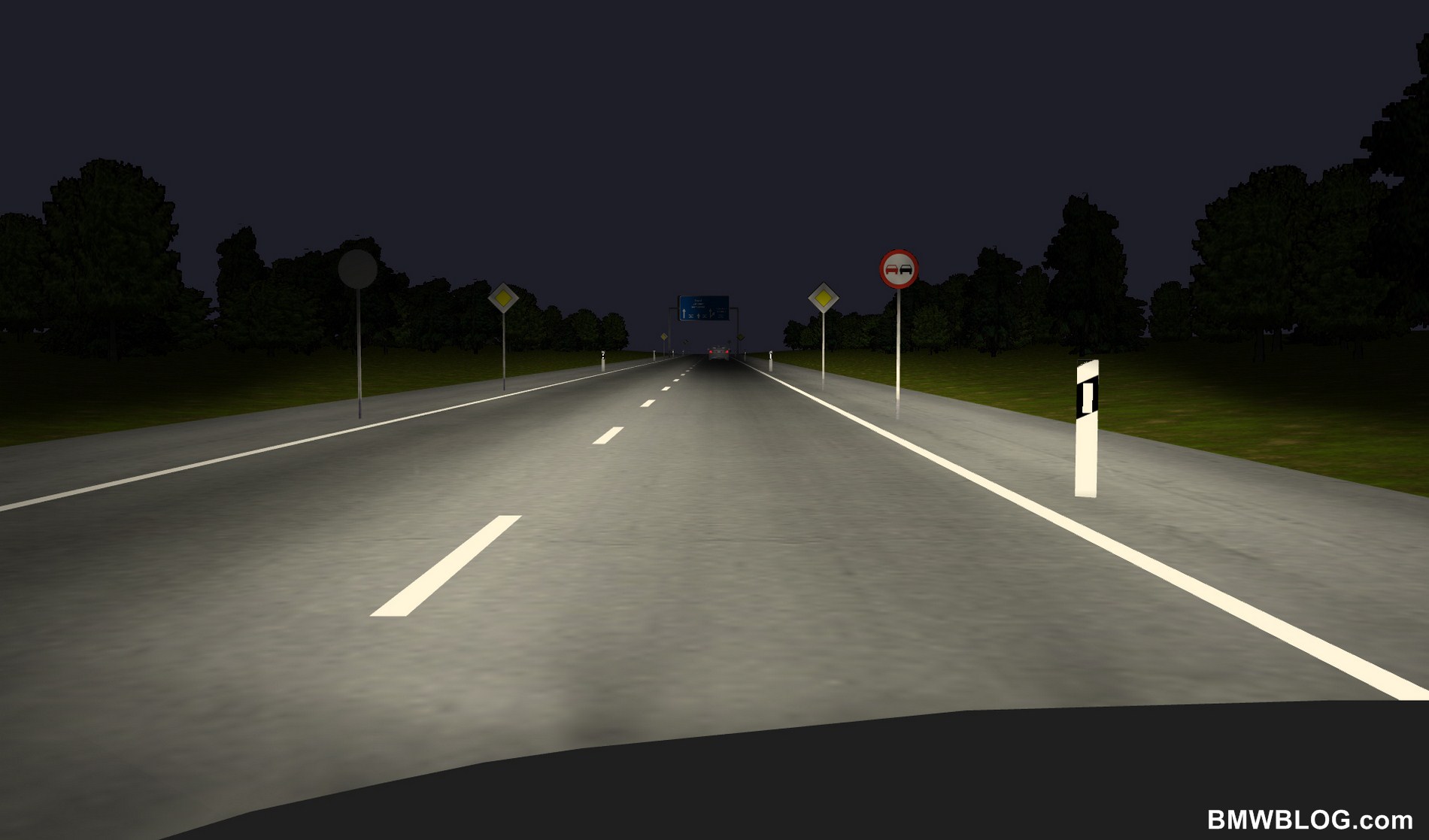
Constantly driving on high beam significantly improves recognition of the course of the road and of hazards, but it cannot be done because other drivers are blinded by the glare. The first step in solving this problem is the high beam assistant, which is already being offered by BMW as special equipment. It recognises other vehicles at an early stage and depending on the traffic situation, switches the beam to high or low automatically. A camera sensor in the interior mirror bracket registers the headlight beams of approaching vehicles from a distance of as much as approximately 1000 metres, and the taillights of other vehicles in front from about 500 metres. The assistant then automatically switches the high beam to low. As soon as other drivers are no longer in danger of being blinded by the glare, the high beam is switched on again. This automatic system and the smooth transition between high and low beam significantly relieve the driver. The high beam assistant also switches to low when the ambient light is sufficient, such as in built up, well-lit areas.
Coming up: the glare-free high beam assistant from BMW.
Using BMW ConnectedDrive technologies, always driving on high beam can become a reality with the glare-free high beam assistant. The system can remain switched on during the entire night drive; approaching vehicles and vehicles in front will be recognised in time and can, so to speak, be actively saved from glare or masked from the light beam. The glare-free high beam assistant also uses the camera sensor in the interior mirror bracket. But in this case, the image processing goes a step further and “recognises” the position of the other vehicle. This object recognition then controls the vehicle’s own headlights, which have a mobile glare mask. The high beam is then “masked” in such a manner that approaching vehicles or vehicles in front are not dazzled. The glare-free high beam assistant from BMW recognises cars, trucks, motorcycles and even bicycles if their lights are adequate. This system sets itself apart from other similar systems offered by competitors, in among other things, that the driver’s guidance in the case of oncoming traffic has priority over adapting the tunnel for the other vehicles. As a result, the driver of a BMW with the glare-free high beam assistant always enjoys the greatest possible high beam illumination available, without dazzling other drivers.
The benefits of the glare-free high beam assistant .
Night test drives by BMW have shown that with the glare-free high beam assistant, a far more intensive use of the high beam is possible. This results in better perception of hazardous situations. At the same time, the significantly greater range of the lights, even with approaching vehicles or vehicles ahead, makes it easier for the driver to follow the road. Less steering movements and the increased feeling of safety thus provide relief to the driver at night. Since the assistant is entirely automatically controlled, the driver no longer needs to manually switch between high and low beam, which results in less fatigue. Night driving in a BMW is thus safer and less stressful.

Adaptive full-LED headlights in the new BMW 6 Series Coupé .
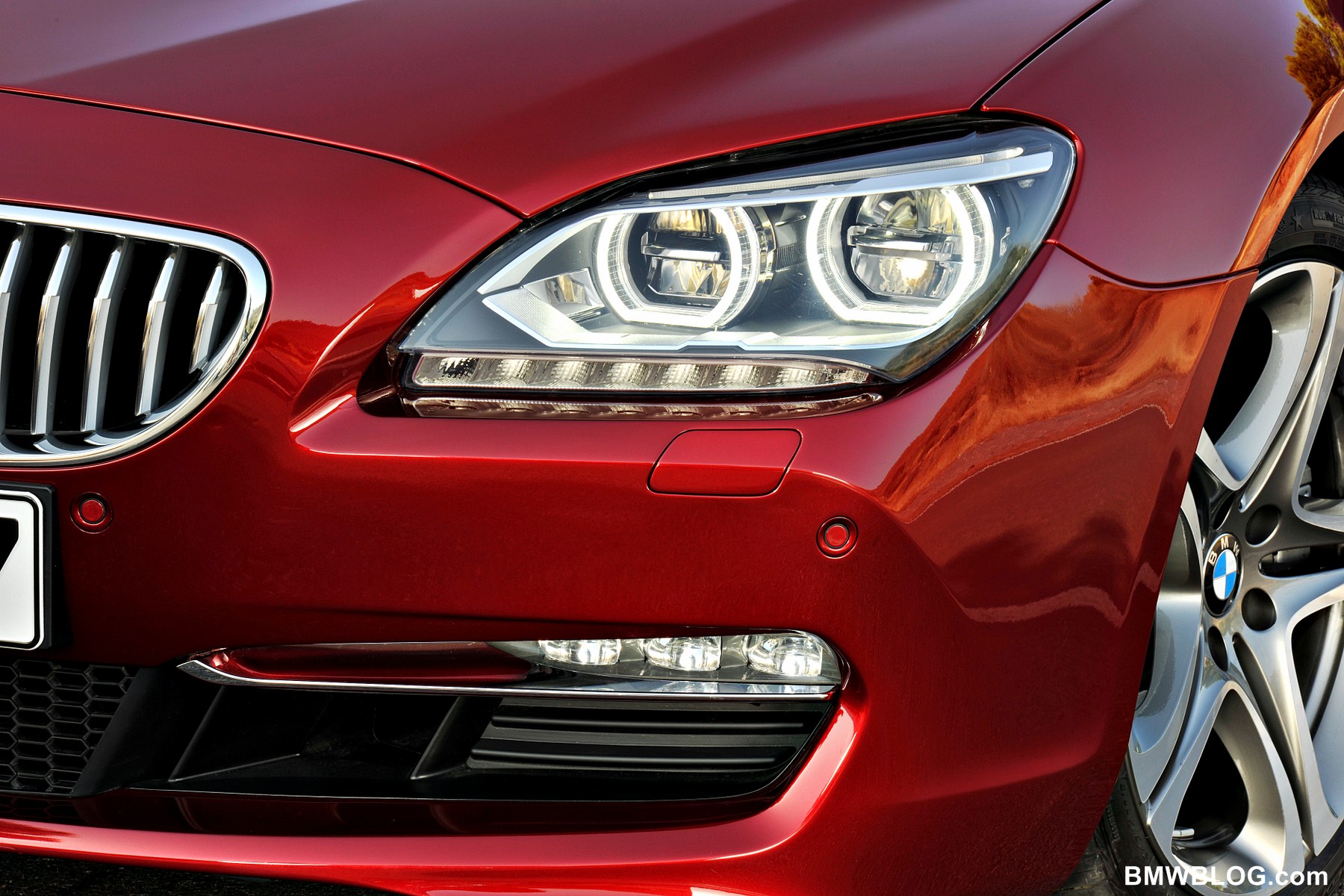
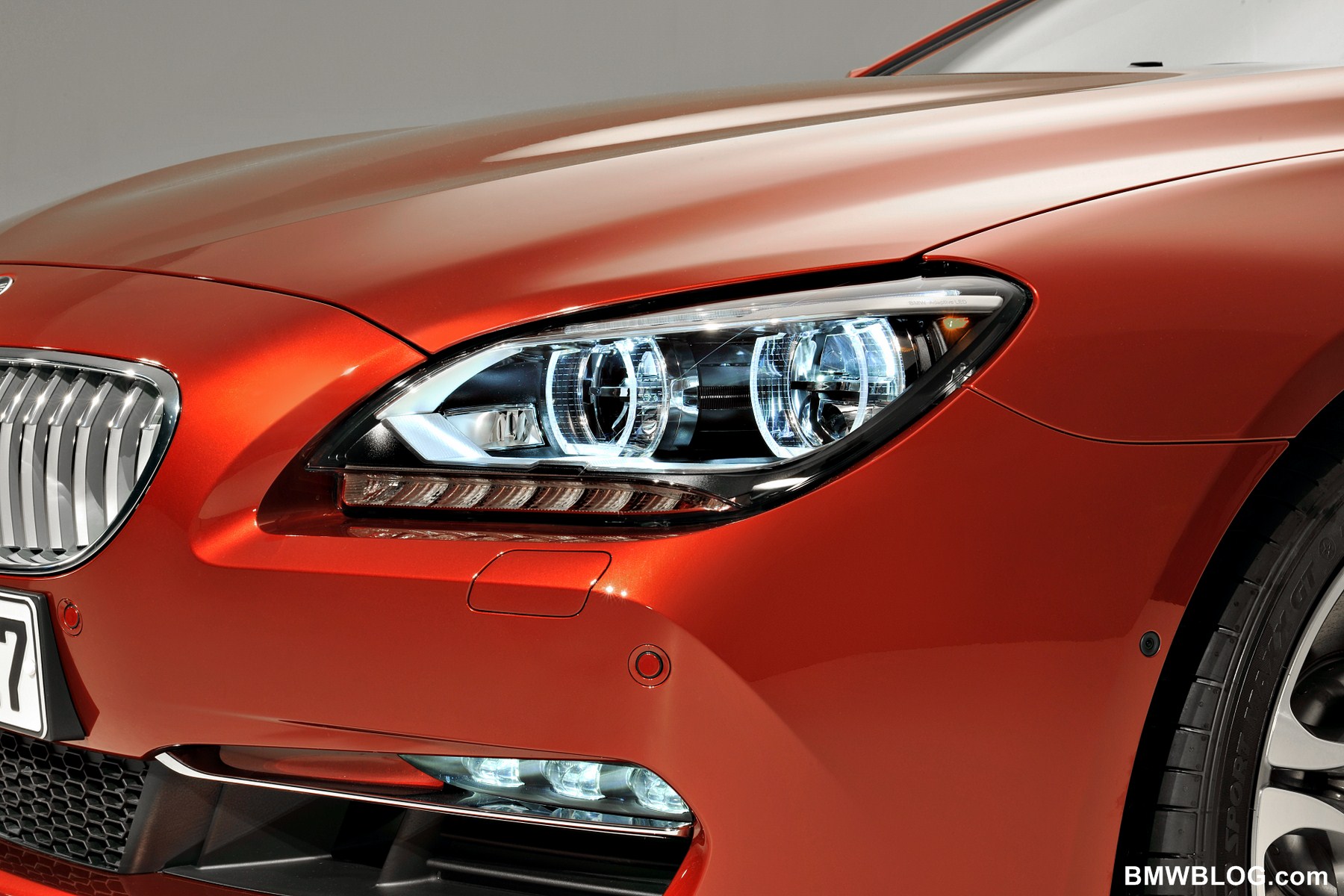
The new BMW 6 Series Coupé already has bi-xenon headlights as standard equipment. These dual round headlights give the sporting, elegant coupé the brand characteristic front look. As an enhanced feature, the BMW 6 Series Coupé can be ordered with adaptive LED headlights. They reinforce the characteristically concentrated look of the vehicle and are, in fact, the most highly-developed vehicle lights currently available. BMW uses the full-LED headlights as adaptive LED headlights in the BMW 6 Series Coupé, i.e. all of the illumination functionality is realised using LEDs.
BMW attaches a great deal of importance to the homogeneity of the lighting modes low beam and daytime running beam. The goal of the development was optimally balanced light distribution, meeting the requirements for directing the attention of the driver, in conjunction with an aesthetic, typical BMW headlight design. The dual round icon has LED light rings as parking lights and the daytime driving light. These light rings are flattened at the bottom, dominated by an LED accentuating light at the top and for the first time have been designed in the form of a three-dimensional body. This component accentuates the typical appearance of the brand both in the daytime mode as well as the night design. For the first time, a BMW at night is now recognisable by its 4-eye front, both on low beam and high beam, the same look familiar from the daytime driving mode. This means that the low beam light is generated in the upper half and the high beam in the lower half of all of the four light rings.
The adaptive LED headlights improve night vision significantly .
The bright white light of the adaptive LED headlights in the BMW 6 Series Coupé effects a strong and harmonious illumination of the road. Particularly easy on the eye: the LED light is considerably closer to daylight than the light from halogen or xenon headlights. Therefore, reflective objects appear with greater contrast and can be recognised earlier.
Adaptive LED headlights, cornering lights and LED indicator lights .
The adaptive LED headlights are controlled as a function of the speed, the steering angle and the yaw rate. The swivelling angle of the headlights thus automatically adjusts itself to the course of the bend. In addition, the cornering light is generated with another LED light source in the headlight housing, which, at speeds up to 70 km/h, ensures a far better lighting in front of and alongside the vehicle in the direction of exit. The LED technology is also used for the turn indicator lights. These LED turn signals consists of eight LED units each arranged in a row below the light rings. Apart from better visibility in darkness, the adaptive LED headlights also significantly improve the signalling action of the lights.

Renderings: BMW 4 Series Coupe and Convertible


Along with the first reports on a future BMW 4 Series, here come the first renderings of the rumored new 4 Series family.
Similar to the 6 Series offerings, the 4er models will fit between the 3 and 5 Series and will feature a coupe-like look. By offering a higher positioned coupe, BMW will compete on the market with Audi and Mercedes, which is said to introduce a smaller SLS model.
The new 4 Series will also allow BMW to price the vehicle slightly higher, at a premium price. The overall dynamic design would appeal to a younger demographic as well and will be a viable alternative to the high-end 6 Series Coupe.

Beside the coupe and convertible variants, a four-dour coupe type of vehicle might be introduced as well. The 4 Series Gran Coupe is said to compete with the A5 Sportback and it will feature a coupe-like roof line.
The F35 4 Series Gran Coupe is said to launch in 2015, while the F33 and F34 3er Coupe and Convertible will come to market in 2013.

Rendering: BMW 2 Series Coupe

Rendering day here in the BMW world and the latest computer generated image attempts to portray the future BMW 2 Series. Confirmed last week by BMWBLOG with the help of inside sources, the new 2 Series will be the host of the upcoming 1 Series Coupe and Convertible models. The upscale 1er cars will join the 2 Series family and will go through a name change.
In 2010, BMW has filed for U.S. trademarks for 2 Series model designation. BMW reserved the trademark applications for the monikers 228, 230, and 235, similar to the 3 Series family designation. While BMW is known for filling far in advance for multiple trademarks and naming conventions, and some of them are never used, this time the new BMW badge will host the upcoming redesigned F32 1 Series Coupe and F33 Convertible.
In order to separate the performance and sportier body shape of the Coupe and Cabrio, BMW will rename the cars as the 2 Series, bypassing the need for overcrowding with the segment of the new 1er Hatch. The 2 Series showcases some new design movement with further progressive sporting interpretation of the hatch. The Cabrio model will continue offering a soft-top roof and clean design lines without compromising looks and performance.

Following the steps of the current 1 Series Coupe and Convertible, the new 2 Series family will make its way onto the U.S. soil, with the 1 Series Hatchback remaining an European-only model.
A rumored BMW M2 is said to be part of BMW’s plans, but a market launch won’t take place before 2014.

BMWBLOG Visits BMW Classic

Munich, Germany – The last stop for me on Innovation Day was a walk from the FIZ on BMW-Allee to the BMW Classic facility. Located on Schleissheimerstrasse, the multi-story building houses pieces of the BMW collection that are not on display in the museum, corporate archives, and vehicle workshops. BMW Classic used to be called BMW Mobile Tradition and it was primarily an in-house restorer and maintainer of BMWs owned by the corporation.
That role has changed however. As appears in the BMW Classic press release, “BMW Group Classic coordinates all the activities of the BMW Group which are associated with the history of the company, its products and three brands. The relevant classic activities of BMW, MINI and Rolls-Royce are unified under the auspices of BMW Group Classic. The platform is formed by the classic mainstays of museum, archives, club support and the BMW Centre, as well as event organisation and specific classic communication. Classics from the BMW Group’s own collection are not simply housed in the museum, they are on the road at events throughout the world.
“The BMW Classic Centre has been available for friends of the BMW brand since autumn 2008. The big advantage for customers who take their vehicle to the original manufacturer is complete service from a single source. The Classic Centre possesses the theoretical knowledge of the vehicles, the technical know-how, the original BMW parts and the infrastructure necessary to integrate all these aspects systematically. Classics in immaculate condition have been sold since autumn 2010 alongside the service and restoration activities. ”
So they now work on customer vehicles. And they have the resources to do that are better than any independent shop. They have the technicians, the parts, and the know-how (including their extensive archives) to restore pre-war, and more frequently, post-war BMWs. While the facility in Munich is limited in total space, they are rolling out the notion of a project “Customer Workshop” in other locations around the world in conjunction with top flight local facilities. And they not only work on classic road going cars and motorcycles, but racing vehicles also.
But that building on Schleissheimer Strasse is still the heart of the enterprise. Herr Florian Moser was my host for the visit and he met me in the lobby, fresh from my day at the FIZ, and gave me a rundown of the BMW Classic’s activities. We did not have an opportunity to view the meeting space and vehicles on the ground floor (one of which was a BMW 303 – the first BMW with the kidney grilles) due to a tour arranged for a club using the meeting facility. Nor did we stop at the archives located on the first floor (second floor to us ‘mercuns). But we did ascend further up the staircase to the workshops and vehicle holding areas.

The stairwell is at the front of the building and is fairly well isolated from the environment of the individual floors. I noticed no old paper smell (a smell that book lovers recognize in the faintest
concentration) as we hit the first floor landing. And then we moved up to the story that housed the road-going cars, and Herr Moser opened the door. And it hits you. The perfume that petrol heads the world over embrace, gasoline and lubricants. I stood there and breathed deeply, carcinogens be damned, I was going to indulge my nostrils in that delightful odor. And with a smile and a sigh, I looked back at Herr Moser, who smilingly said, “We know who the gear-heads are when we open the door.”
And as good as the olfactory welcome is, the visual treat is beyond belief. Arrayed throughout the room are cars and motorcycles that speak directly to the evolution of BMW. Pre-war cars, a handful of immediate post-war cars (including a 700) and then the Neue Klasse cars, 2002s, legions of 3ers, 5ers, and 7ers. An odd duck or two thrown in for good measure. And then there’s the true odd duck, the 16 cylinder 7er, the motor of which is known as ‘Goldfish’. How difficult is it to cram 16 cylinders in a 7er,? Well, they had to put the radiator in the rear and there is a cyst like bulge on each rear fender to scoop air into the car.

As great as that floor is, moving to the third floor, opened up the M, for motorsports, collection. Here, in one room are as many McLaren F1 cars as you’ll see gathered in one place outside of a Concours d’Elegance. And there’s an N12/13 engine for a Brabham F1 car, presumably a BT-52 (the B in the car designation stand for Brabham and the T stands for Sir Jack’s designer, Ron Tauranac). GT cars, racing M3s, DTM machines and record run motorcycles are everywhere you look. The on-track history this place holds is extra special to bimmerphiles.
In addition to the cars housed on the 2nd and 3rd stories, each story also has dedicated work spaces that are used to maintain and rebuild cars. And now, with its expanded mission, BMW Classic can resurrect your dream historical BMW, whether it’s a pre-war 328 or a 3.0 CSL Batmobile. Truly a special place and mission.

Very interesting Games